

Care that continues after the visit.
Cura42 builds and deploys AI care coordination agents that carry follow-up, adherence, and re-booking through the gaps no team can staff, without replacing a single system.
Talk to us
The gap
Recovery happens at home. Nobody is on shift there.
The consultation is handled well. The discharge is handled well. Then the patient goes home with instructions, and the longest part of care begins where no team is staffed to see it.
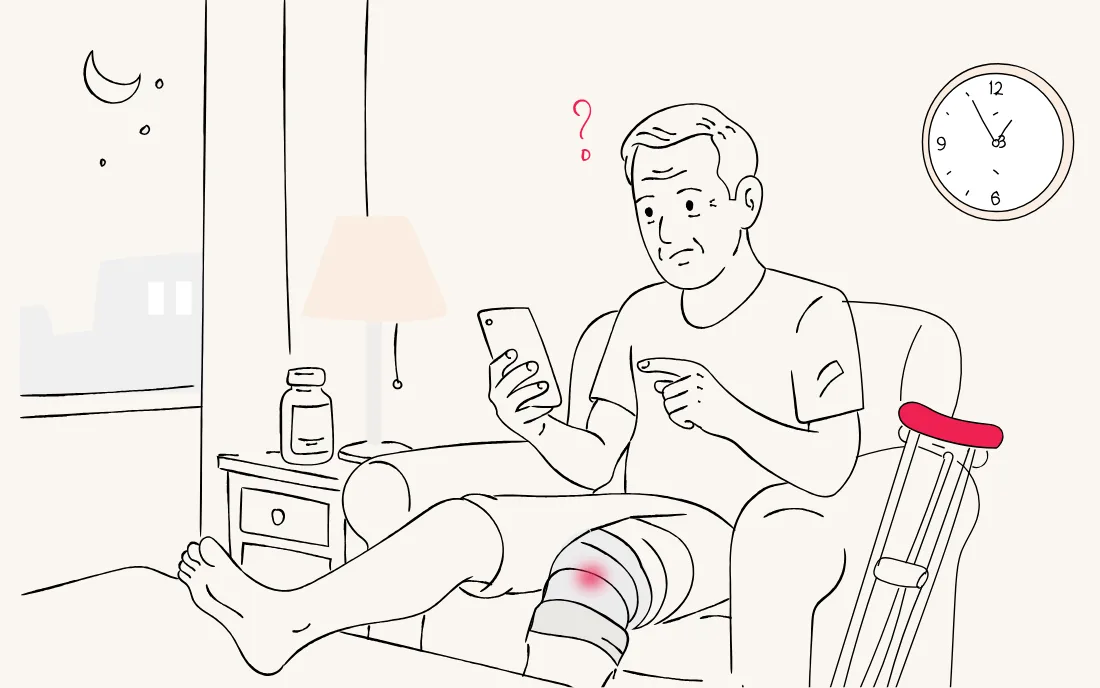
Day 0The visit. Every system in the hospital is watching.
Days 1 to 41Nobody's job.
Day 42The review that never got booked.
What Cura42 does
AI agents that do the follow-up work no team has time to staff.
Three jobs, done every day, for every patient on a care plan. Grounded in the hospital's own protocols. On top of the systems it already runs.
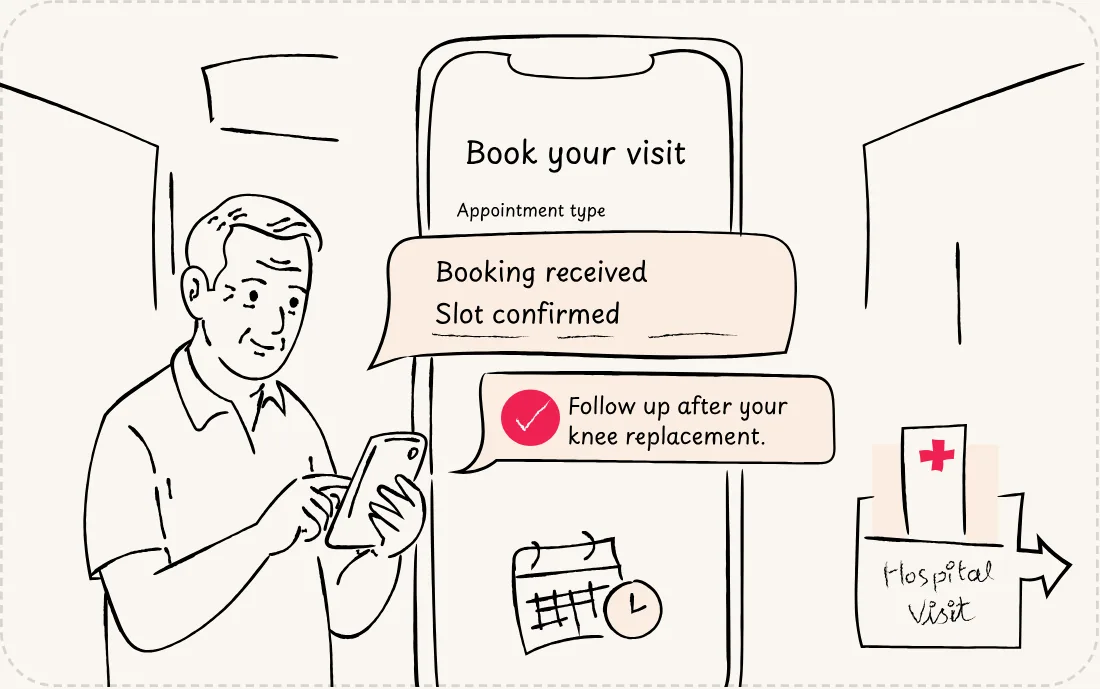
Follow-up
Check-ins after discharge and between appointments. Answers logged. A nurse brought in when a reply needs one.
Adherence
Medication, physiotherapy and lab tasks tracked against the plan. A flag before a slip becomes a readmission.
Re-booking
The next appointment that would otherwise never get made. Booked, confirmed, rescheduled when life gets in the way.
Where it runs today.
Cura42
500,000+
patients on the platform at Kauvery Hospitals, our anchor hospital reference
Deployed under Cura42
Healthcare organisations this team has built for
Kauvery HospitalsApex HospitalsNHRA BahrainMoPH QatarUmoor SehhatNourishWithSim













The whole platform
Three service lines. One record underneath.
The front door brings the patient in. The agents carry them between visits. The record remembers all of it, so the next visit starts with context rather than a blank page.
PatientWhatsApp, app, voice, web
Digital Front Doorhow patients enter care
BookingRegistrationRemote check-inPatient portalNavigation
Offered where a hospital has none. Integrated where one exists.
Care Coordination AI Agentshow patients are guided through care
Follow-upAdherenceRe-bookingTriage and intakeChronic programmes
Where we start. The between-visits work, staffed.
Patient Longitudinal Recordhow context is kept over time
Check-insAdherence historyWearablesProgrammesFamily profilesConsent and audit
One record per patient. Every module feeds it. Every agent reads from it.
Your systems, unchangedEMR, HIS, LIS, RIS, billing, health IDs, over HL7 and FHIR
The record
One record per patient. Built across years, not visits.
The EMR holds the encounter. The record holds everything around it: what was taken, what was skipped, what the patient said on a Tuesday in week six. Adopt one module or thirty, it is the same record, and it compounds.
Point solutions cannot build this, because they only see their own slice. EMR vendors are not designed for it, because their unit of work is the visit.
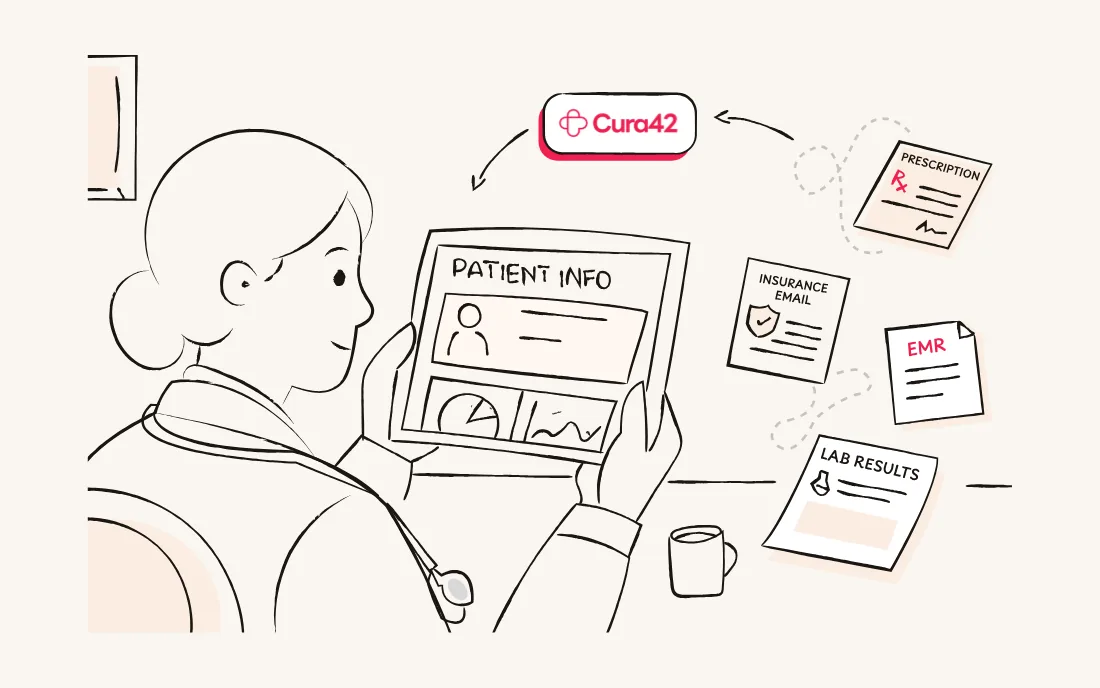
- Year 1A cardiac programme. Six weeks of follow-up, logged.
- Year 2The diabetes programme inherits the history.
- Year 3Family profile, wearables, three programmes. Still one patient, one record.
How the agents behave
Grounded in your protocols. A human always one message away.
- They run inside a pathway your clinicians define. No diagnosis. No improvising. A check-in, a reminder, a booking, or an escalation.
- Anything the protocol doesn't cover goes to a person. The patient is answered now, from the approved space. The question is flagged for review in parallel.
- Everything is written to the record. What was said, when, and why a nurse was brought in.
Good morning, Mr Rahman. Three of your blood pressure readings this week were above your target. Your nurse, Priya, will call you tomorrow at 9 to talk it through. Does that still work?
Yes. Should I keep taking the evening tablet?
Yes, please continue as prescribed. I've passed your question to Priya so she can cover it on the call.
What a hospital gets
Bring one service line with a follow-up problem you can put a number on.
A revenue line you already own
The reviews, rehab sessions and repeat visits that go unbooked today, booked. No new service, no new staff.
Patients who stay
A chronic patient followed between visits stays with the hospital that followed them. Lifetime value, kept in your system.
Referrals that come on their own
People talk about the hospital that checked on them on day nine. That is the cheapest acquisition you will ever run.
An experience you can measure
Satisfaction scored after the six weeks, not the six minutes. Feedback collected by the same agent that did the follow-up.
Your care team's time back
Nurses handle the escalations that need a nurse. The phone rounds, reminders and re-bookings are carried for them.
One number, reported weekly
Agreed before we start. Review attendance, readmission, programme retention. Proof, not a promise.
What we need from you: one service line, an EMR that stays exactly where it is, and a clinical lead who owns the pathway.
Where we start
One service line. Live in weeks. Measured from week one.
Start where the leakage is measurable
- CardiacPost-discharge check-ins, rehab adherence, review re-booking
- Diabetes and metabolicAdherence, lab follow-up, quarterly re-booking
- Orthopaedic rehabPhysio task tracking, recovery check-ins
- Access and intakeTriage and intake agent, booking, remote registration
Every module is configured, never custom-built. Add the next without disturbing what is live.
A first deployment
- Weeks 1 to 2Map the pathway with your clinical lead
- Weeks 3 to 6Build and connect to your EMR and booking system
- Weeks 7 to 8Supervised pilot with one cohort, every escalation reviewed
- Week 9 onLive and reported against one outcome number agreed up front
Built to be trusted
Built by people who have done this before. Your regulators designed in.
The team
- Healthcare software, not software in general. Hospital systems, diagnostics, patient platforms and national health programmes, built long before Cura42 existed.
- Hospitals in India and the Gulf are familiar ground. We have integrated with the systems, and we have sat through the procurement.
- We know what an EMR integration costs a clinical team. The plan accounts for it rather than discovering it in week three.
Configured to the jurisdiction it runs in
- UAEDHA, DoH, ADHICS
- Saudi ArabiaSDAIA, PDPL, NPHIES
- BahrainNHRA
- IndiaDPDP, ABHA
- EverywhereHL7 and FHIR, consent-aware exchange, role-based access, audit log on every read
Why Cura42 exists.
My grandfather, Yakub, hosted constantly and walked markets for hours. After a successful knee replacement, physiotherapy faded, counselling never really happened, and no system checked whether he was moving or slowly withdrawing. He lost function in both legs.
The surgery worked. The care stopped when the procedure ended.
I have seen that pattern in every hospital since. What was missing was not intent. It was continuity. Cura42 is built for the long, ordinary work of staying well.
Khuze Siam, Founder
For partners
A small number of partners who already sit inside the hospitals we want to serve.
EMR and HIS vendors
A between-visits layer on top of your record, without building one. We read from your system and write back only where scoped. Your clinical record stays the system of truth.
Integrators and distributors
A product to carry into the accounts you already hold in the UAE, Saudi Arabia, Bahrain and Qatar. Configured per client, deployed in weeks, supported from Chennai and the Gulf.
Regulators and ministries
National patient engagement programmes built on one record per citizen. Health ID integration and consent-aware exchange as the baseline, not the add-on.
Talk to us
The visit ends. The care continues.
Tell us which service line and which number you would like to move. We will come back within two working days with how we would approach it, what we would need from your team, and what the first outcome report would measure.
Mail us at
hello@cura42.com